A carp looking up sees the whole world above the water squeezed into one small circle.
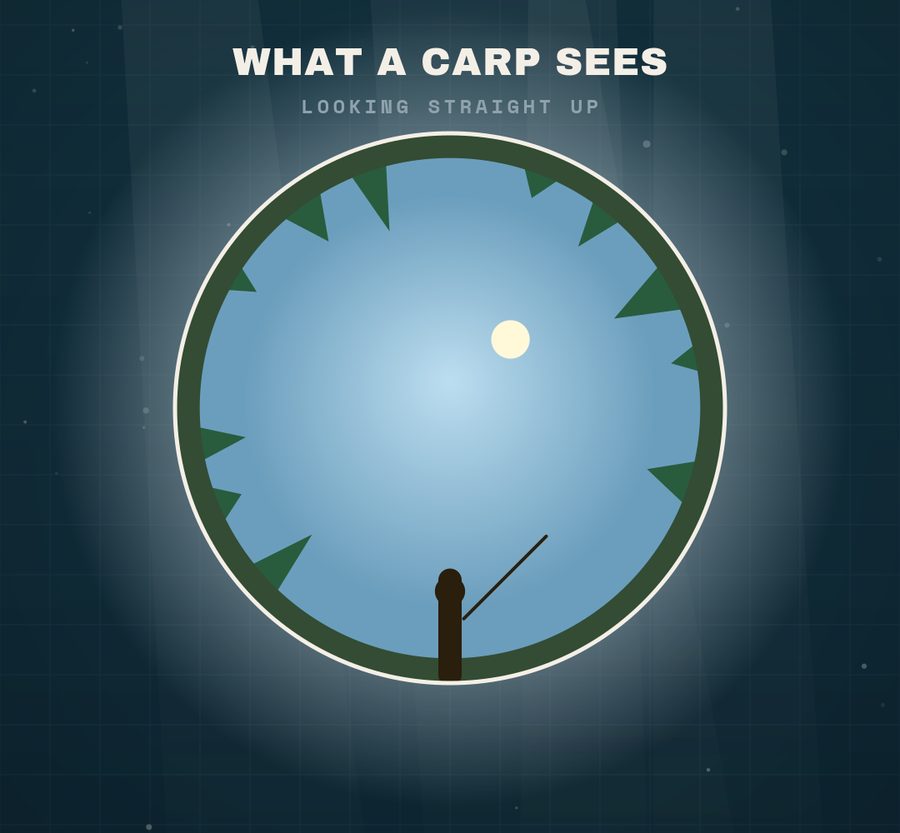
A carp looking up doesn't see the sky the way we do. The whole world above the water, the sky, the trees and you on the bank, is squeezed into one bright circle. It's called Snell's window, and it's simple physics.
Light bends at the surface
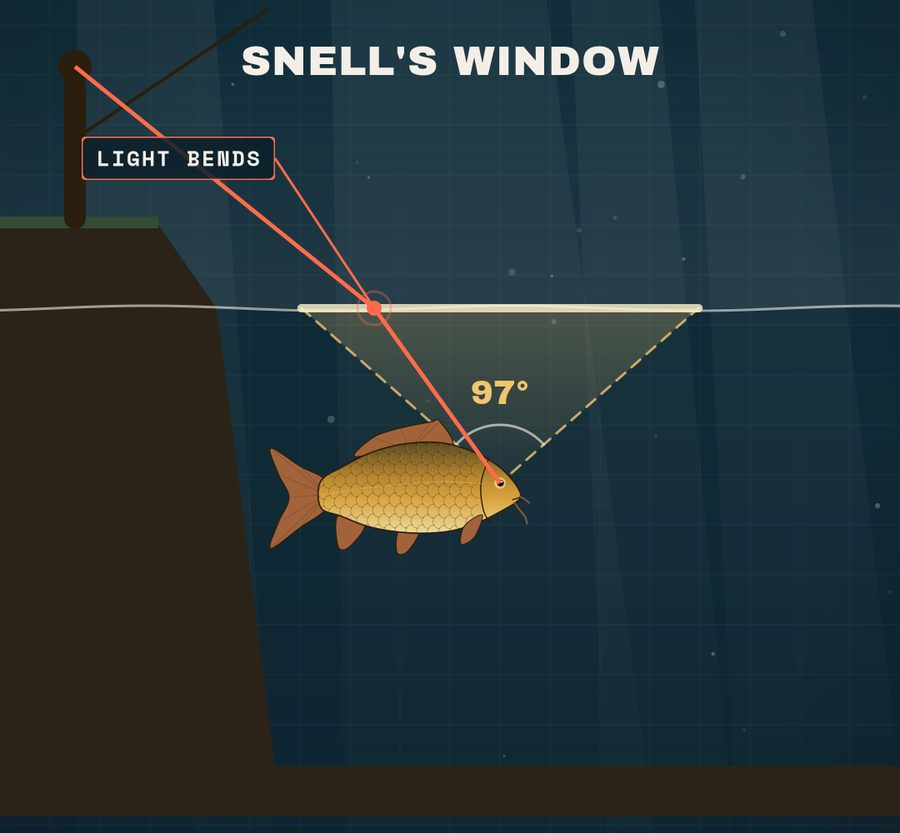
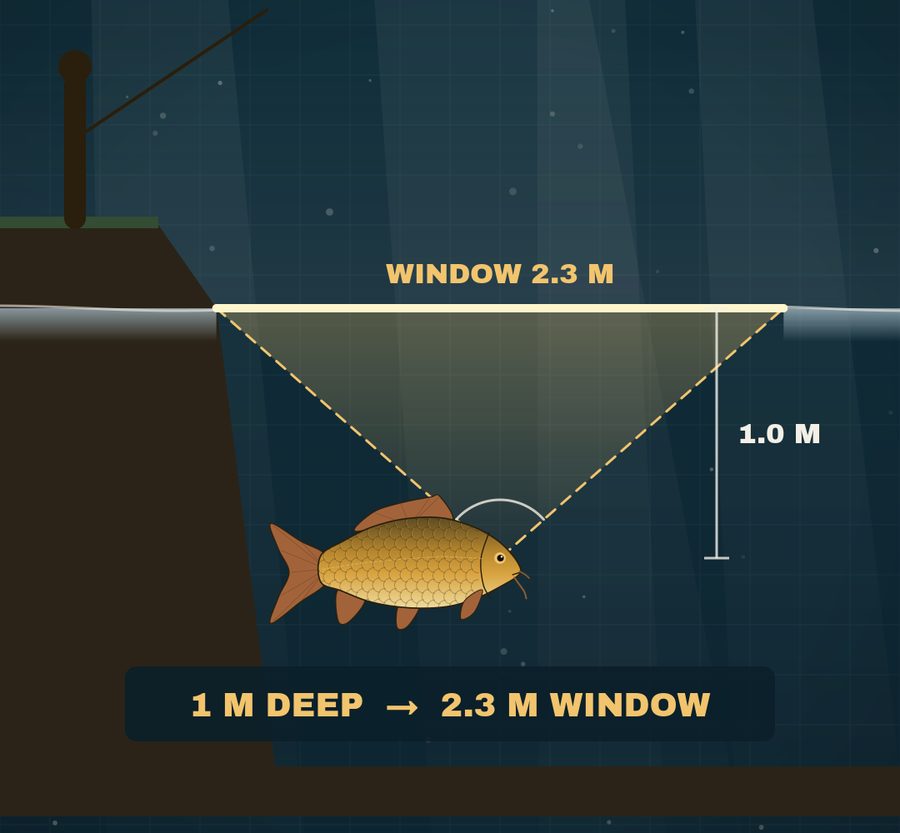
Light bends as it passes from air into water, because it slows down. The rule for how much it bends is Snell's law. Light arriving from right down at the horizon bends the most, ending up at about 48.6° from straight up. So everything above the water, from horizon to horizon, gets packed into a cone about 97° wide, just under a hundred degrees.
Outside the window: a mirror
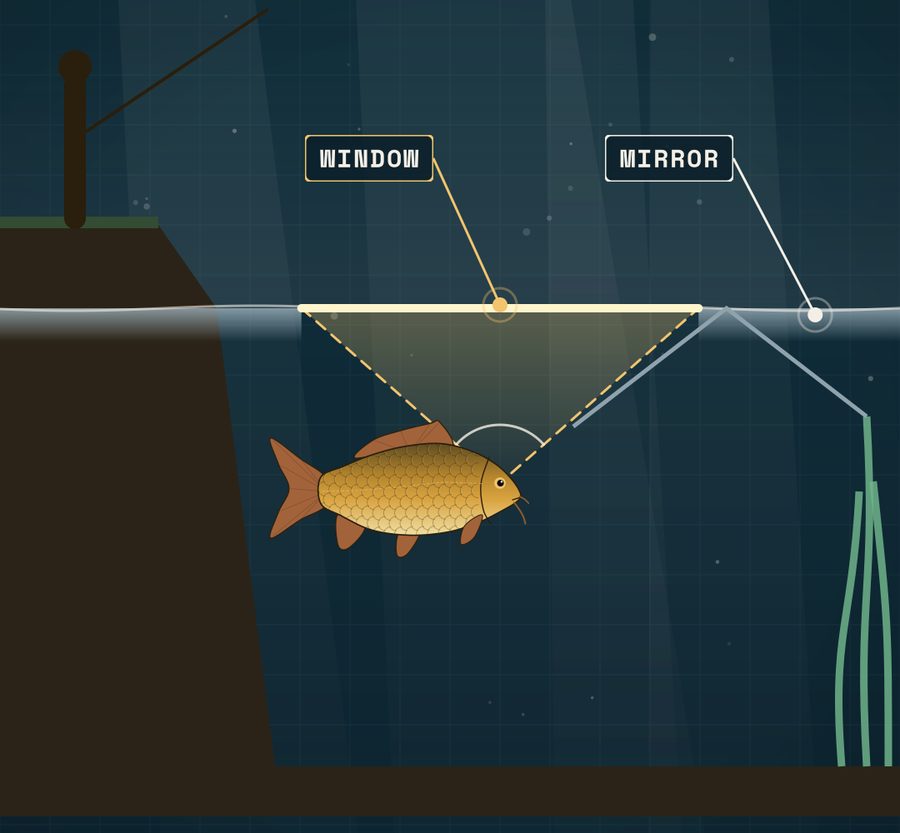
Look up at a steeper angle than the edge of that cone, and no light from above can reach you that way. Instead, the underside of the surface reflects, like a mirror, showing the lakebed back to the fish. This is total internal reflection. On a calm day it's a clean silver mirror. Ripples break both the window and the mirror up.
Deeper fish, bigger window
The window is a cone, so its circle on the surface grows with depth. Its diameter is about 2.3 times the depth: a carp one metre down has a window about 2.3 metres across.
You're at the edge
Things near the horizon, like an angler on the bank, get squashed into the rim of the window. The taller something is, the further it reaches into the window and the more of it shows. Stand tall on the skyline and you show up more. Crouch, and you shrink back into the squashed edge.
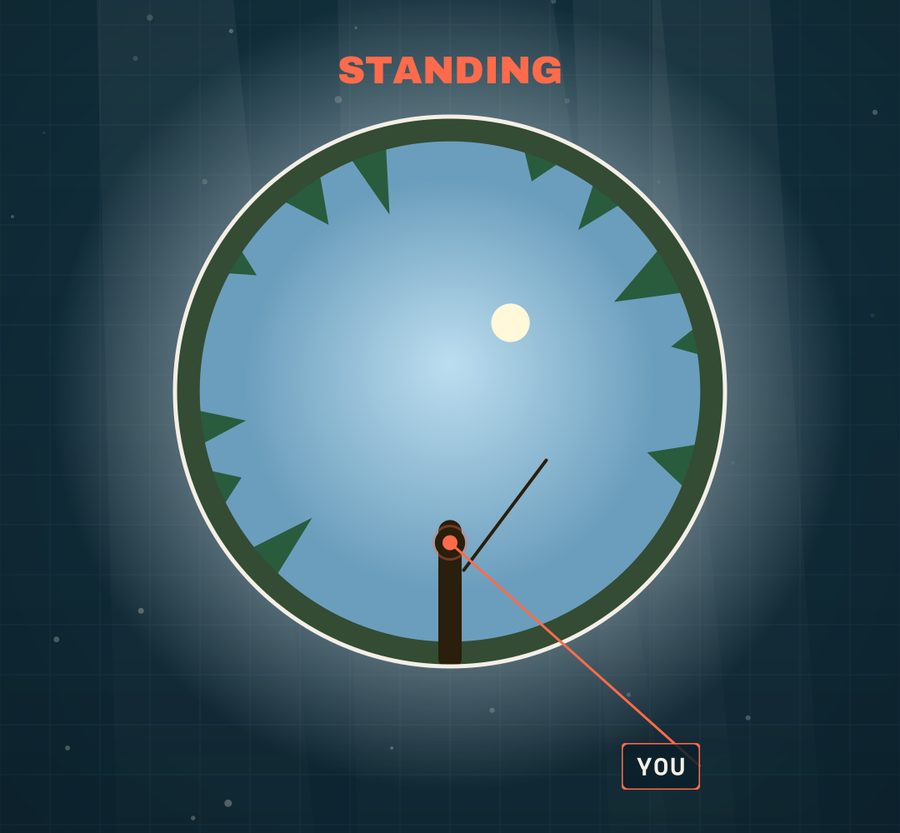
We're not claiming carp recognise anglers. It's just optics. But less of you in the window is less to notice.
How we know: the sources
Every claim in the video, where it comes from, and how sure we are.
-
Light from above the surface is refracted into a cone of ~97° (twice the critical angle of 48.6° for water, n ≈ 1.333)
SOURCE Basic optics (Snell's law); e.g. Hecht, Optics. The term "Snell's window" is standard in fish-vision literature.
CONFIDENCE High
-
Outside the window, the underside of the surface reflects (total internal reflection), showing the bottom
SOURCE Basic optics
CONFIDENCE High on a calm surface. Ripples break both the window and the mirror up.
-
Window diameter ≈ 2 × depth × tan 48.6° ≈ 2.27 × depth, so ~2.3 m at 1 m deep
SOURCE Geometry from the above
CONFIDENCE High (calm water, eye depth)
-
Objects near the horizon are compressed into the rim of the window; taller objects reach further into it
SOURCE Optics of refraction near grazing incidence
CONFIDENCE High
-
"Keep low" makes an angler less visible
SOURCE Follows from the above, and standard bank-craft advice
CONFIDENCE High as physics. Carp's recognition of anglers isn't claimed.
-
The fish-eye graphic
SOURCE Schematic, not a photo-real render
CONFIDENCE Illustrative