Mirror carp and common carp are the same species.
Mirror carp and common carp look like different fish, but they're the same species, Cyprinus carpio. The big visible difference comes down to one gene.
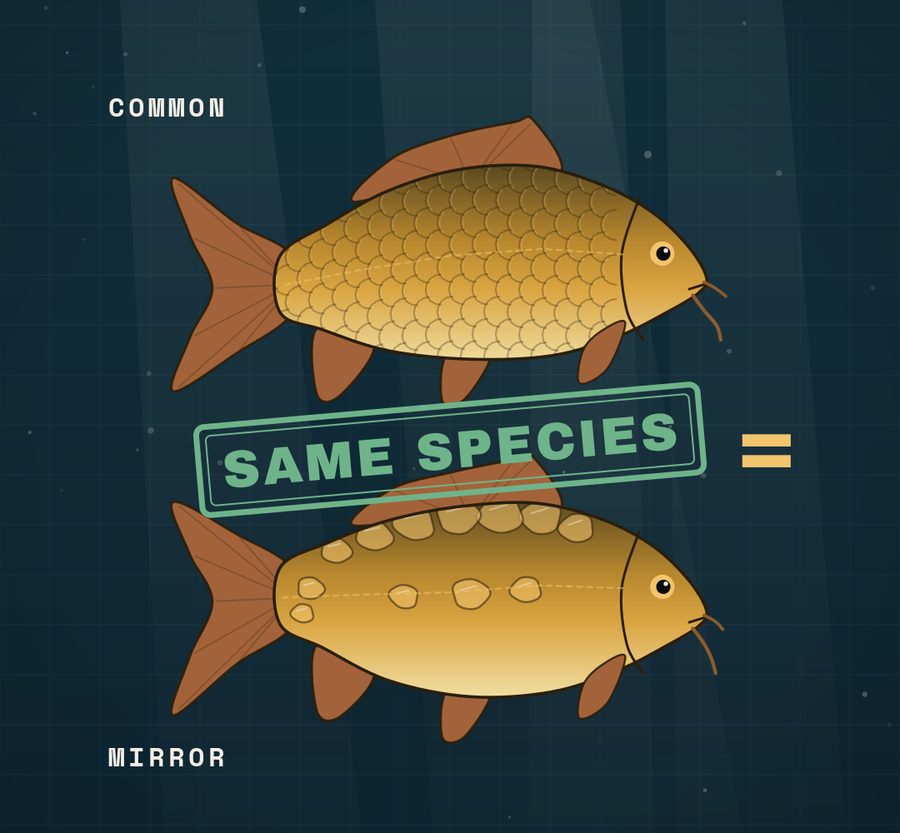
One species, different scale patterns
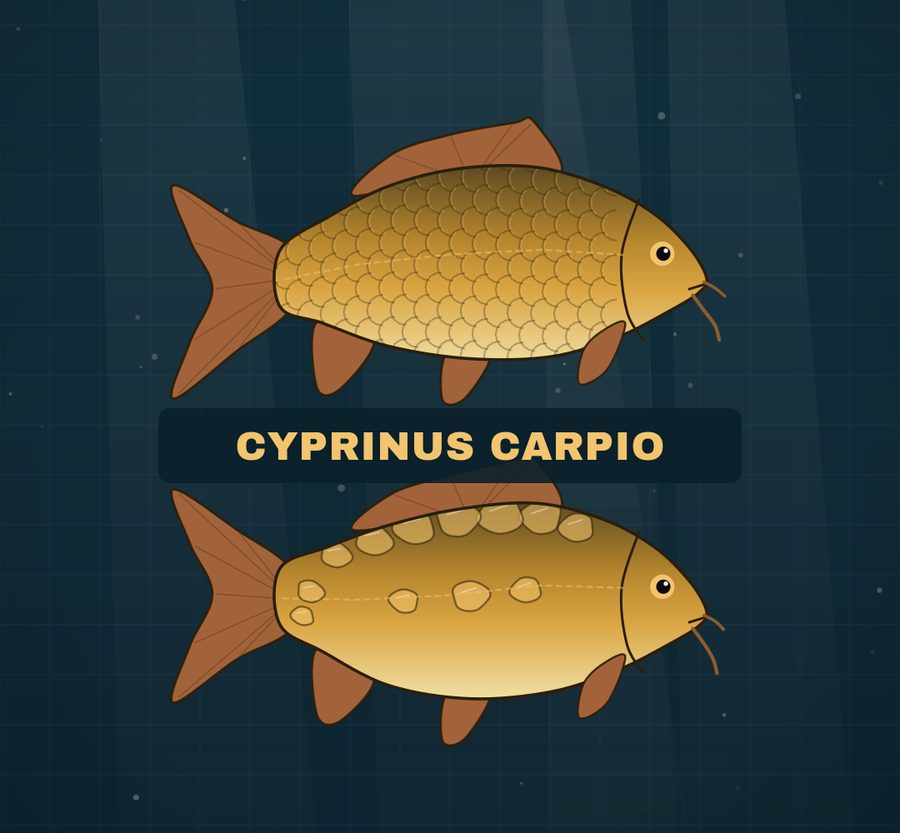
Commons, mirrors, linears and leathers are all Cyprinus carpio. The difference you can see, the scales, is down to a small number of genes that have been known about since classic carp genetics work in the 20th century.
The mirror gene
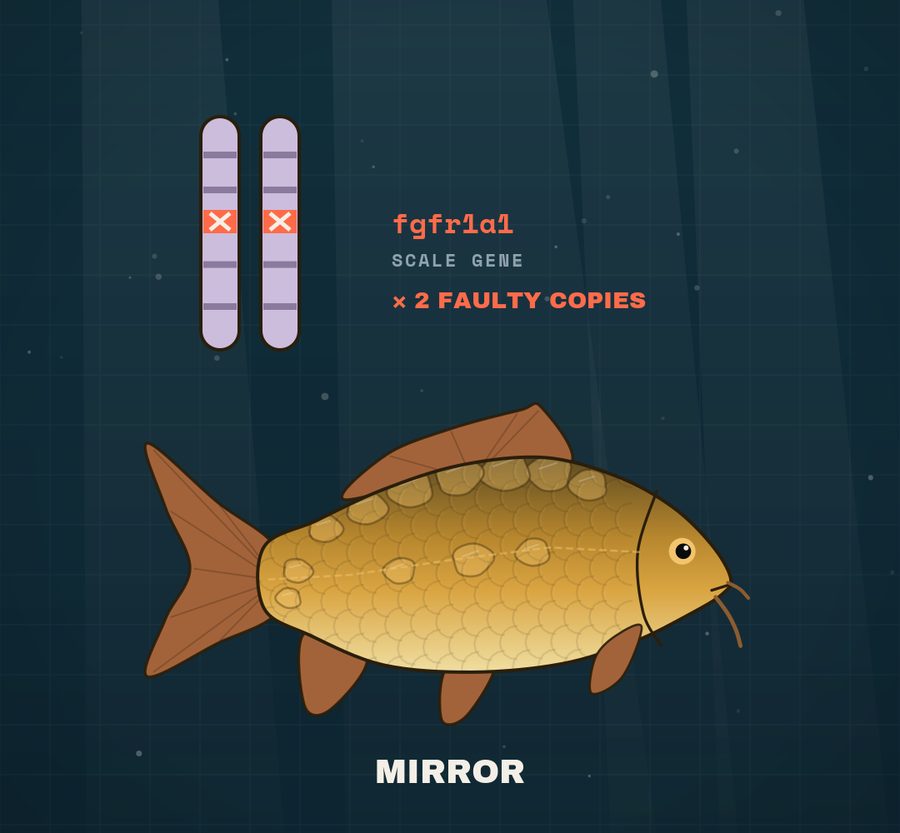
Mirrors carry two faulty copies of a scale gene, so most of their scales never form. In 2009, researchers pinned that gene down as fgfr1a1. The mirror version is recessive: one working copy is enough to make a fully scaled common, so you need two faulty copies to get a mirror.
How two commons can have mirror babies
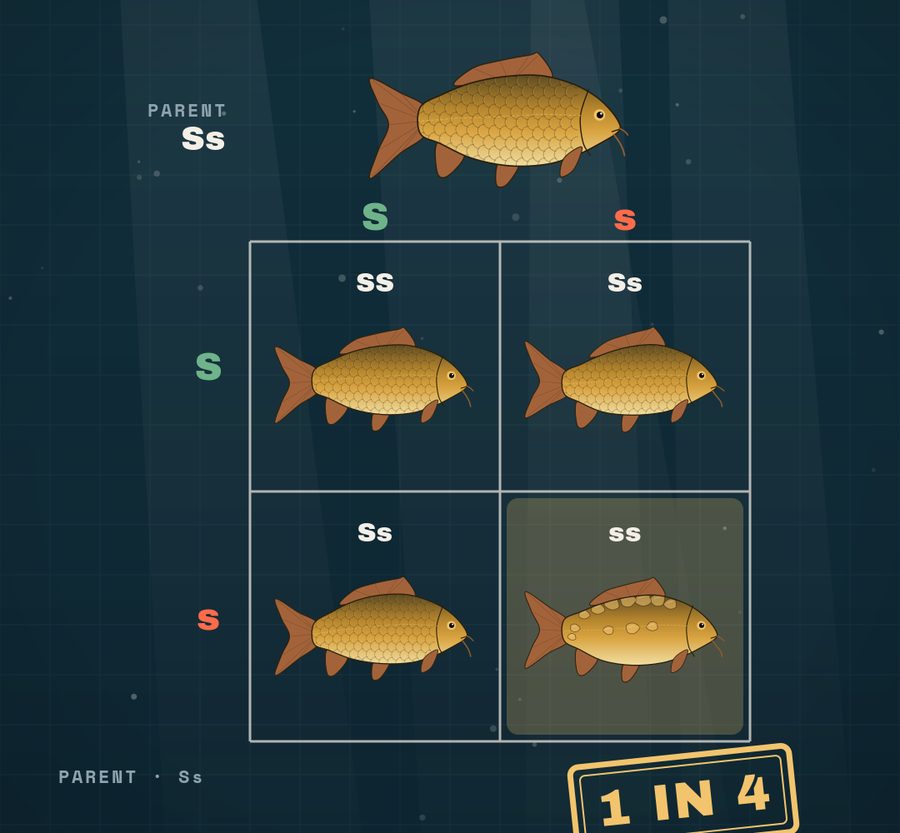
Because the mirror version is recessive, a common can carry one hidden faulty copy without showing it. If two of these carriers spawn, each youngster gets one copy from each parent. On average, one in four gets two faulty copies and comes out a mirror. The other three are commons, two of them carriers themselves.
Leathers
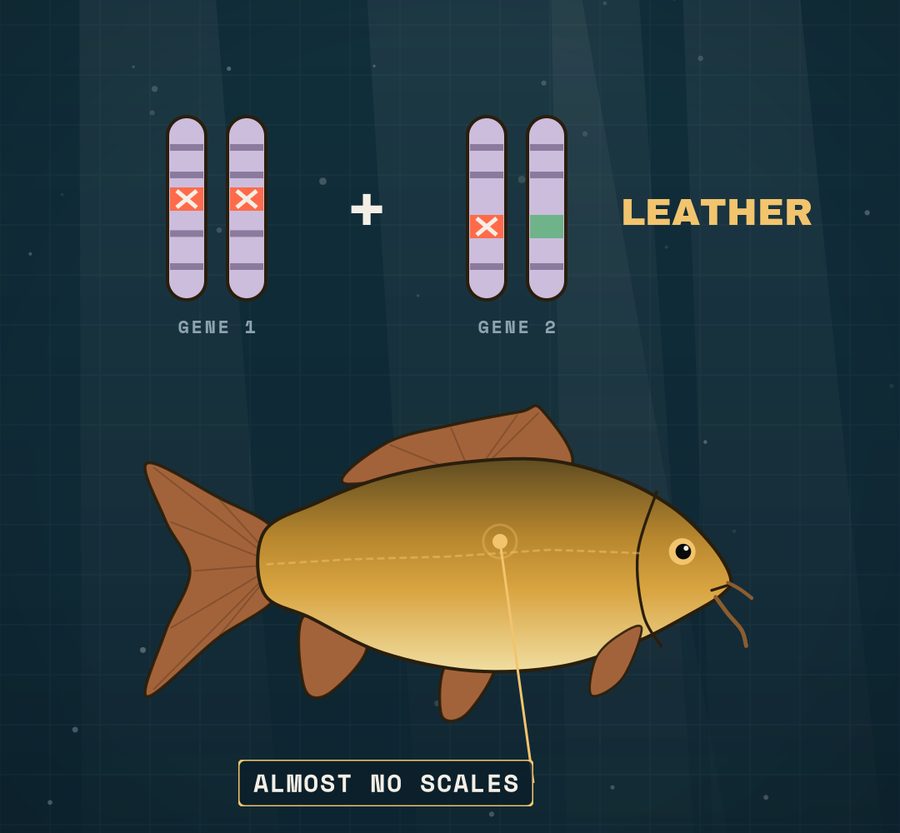
Add a fault in a second gene on top of the mirror genes, and you get a leather, with almost no scales at all. That same second gene in a fish with at least one working copy of the scale gene makes a linear: a single neat row of scales along the lateral line.
Wild commons, farmed mirrors
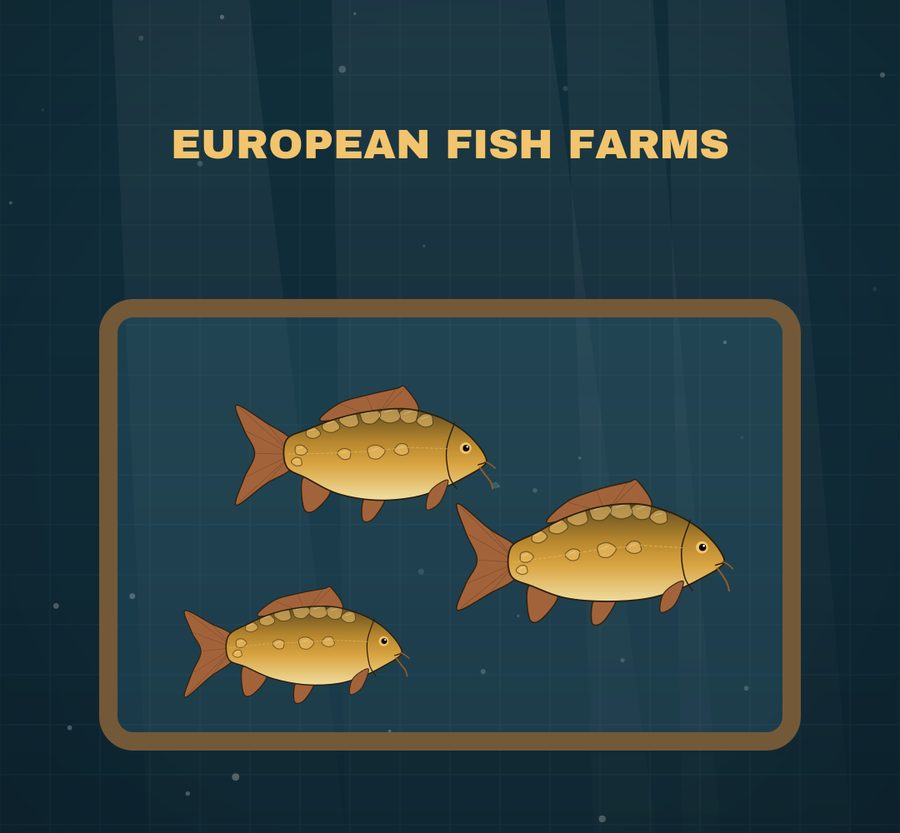
The fully scaled common is the wild type. That's what wild carp populations look like. Mirrors were selected on European fish farms over centuries of pond culture, which is why they're so common in our fisheries today.
We're careful not to say the two are identical in every way. Some studies report small differences in growth and physiology between scale types. But they're one species, separated mostly by one gene.
How we know: the sources
Every claim in the video, where it comes from, and how sure we are.
-
Common, mirror, linear and leather carp are all Cyprinus carpio
SOURCE Standard taxonomy; Kirpichnikov, Genetics and Breeding of Common Carp (1999)
CONFIDENCE High
-
The mirror pattern is recessive: mirrors carry two copies of the "s" allele
SOURCE Kirpichnikov (1999); classic carp genetics
CONFIDENCE High
-
The "s" locus is the gene fgfr1a1
SOURCE Rohner et al. (2009), Cryptic variation in morphological evolution: teleost fish scales, Current Biology 19: 1642–1647
CONFIDENCE High.
-
Two carriers (Ss × Ss) give, on average, 1 in 4 mirrors
SOURCE Mendelian inheritance
CONFIDENCE High (an average across many offspring)
-
Leathers are "ss" plus one copy of a dominant mutation at a second locus ("N"), which reduces scales further. Two copies of N are lethal.
SOURCE Kirpichnikov (1999)
CONFIDENCE High. We don't mention lethality in the VO.
-
The fully scaled common is the wild type
SOURCE Wild C. carpio populations are fully scaled
CONFIDENCE High
-
Mirrors were selected in European pond aquaculture over centuries
SOURCE Balon (1995), Origin and domestication of the wild carp, Cyprinus carpio, Aquaculture 129: 3–48
CONFIDENCE Medium-high. We say "over centuries", not a specific date or reason.
-
"Same body" / behaviour
SOURCE Not claimed. Some studies report small growth and physiology differences between scale types, so we avoid "identical".
CONFIDENCE n/a